
#MoraInnovatesForUs
Overview
The “Towards a National Landscape of Coexistence” initiative addresses Sri Lanka’s persistent human–elephant conflict (HEC) through innovative spatial and policy planning approaches. Conducted by 31 undergraduate students from the BSc Honours in Town & Country Planning program at the University of Moratuwa, the project envisions a future where human settlements and wildlife thrive together through balanced, evidence-based land-use planning.
The study proposed four strategic approaches to strengthen the national physical planning framework, coupled with district-level land-use guidelines and village-level resilient design strategies. These multi-level solutions create a scalable model for coexistence that can guide both policy and practice.
Technology / Approach
The project is grounded in spatial and policy planning for conflict mitigation, integrating:
- Land-use planning techniques that balance human and ecological needs.
- A Decision Support System (DSS) to determine appropriate land uses and assess potential impacts in contested zones across Sri Lanka.
- Integrated data-driven planning to identify high-conflict areas and optimize land allocation for coexistence.
Benefits and Target Groups
Benefits include:
- Reduced frequency and intensity of human–elephant conflict incidents.
- Improved land-use efficiency and ecosystem sustainability.
- Lower economic losses from crop damage, property destruction, and fatalities.
- Enhanced community engagement and resilience through participatory planning.
Target groups:
- Urban and rural planning authorities
- Conservation departments and local governments
- Community organizations in HEC-prone areas
- Policy planners and academic institutions working on sustainable land management
Key Features and Uniqueness
- Integrated spatial planning for HEC mitigation in contested landscapes.
- Multi-level implementation — national, district, and village scales.
- Community-informed design strategies built on local knowledge.
- Policy-ready frameworks, adaptable across multiple regions.
- High social return on investment (SROI) through prevention-focused planning and reduced compensation costs.
How this differs from existing?
Unlike isolated fencing or reactive interventions, this initiative introduces preventive, policy-level strategies emphasizing coexistence over control. It bridges ecological, social, and governance dimensions through land-use adaptation and community-driven design.
By establishing coexistence zones and optimizing spatial decisions, the project offers:
- Long-term reduction in human–elephant casualties.
- Stabilized rural economies and improved food security.
- Lower government expenditure on emergency response and compensation.
- Strengthened local governance and planning capacities.
This holistic approach represents a paradigm shift — moving from crisis management to sustainable coexistence, aligning with global conservation and social innovation goals.
Key Social Innovation Elements
1. Developing Early Metrics and Building on Lessons Learned
Impact metrics were established early to evaluate engagement, dissemination, and feedback. Lessons from stakeholder interactions continuously informed refinements in policy recommendations and outreach strategies.
2. Pivoting and Focusing on Key Target Areas
The project adjusted its priorities to focus on high-conflict districts, integrating local-level solutions and national policy dialogues for maximum relevance and scalability.
3. Sharing Successes and Failures Openly
Through transparent dissemination and dialogue, the team cultivated a shared language of coexistence that resonates across planners, conservationists, and communities.
Impact Metrics
- National Reach: Research findings presented at multiple national forums.
- Stakeholder Recognition: Endorsed by senior officials from the Urban Development Authority, Mahaweli Authority, and National Physical Planning Department.
- Engagement:
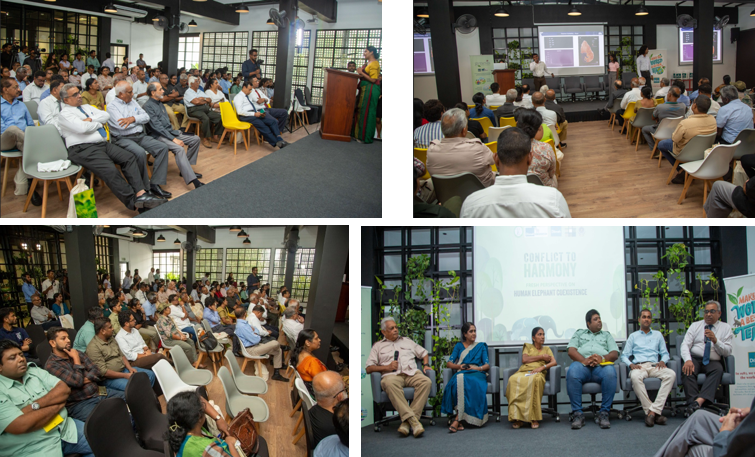
- 100+ participants (officials, conservationists, academics) attended the first dissemination event at Genesis – Dilmah Centre for a Sustainable Future, Maligawatta (Dec 10, 2024).
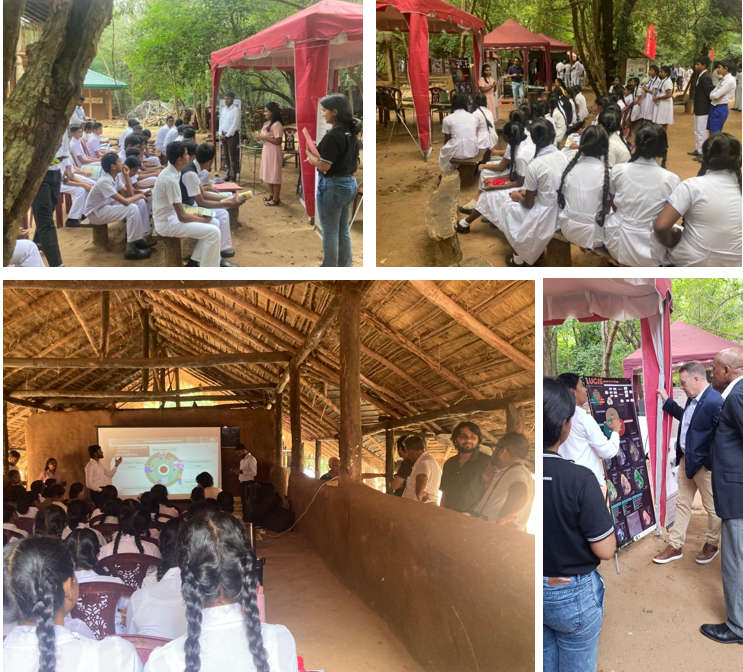
- 800+ attendees visited the public exhibition at the Earth Summit, Mahiyanganaya (Feb 11, 2025).
- Continuing Impact: Findings continue to evolve through further academic research and stakeholder integration.
Partnerships
Collaborating with:
- Dilmah Conservation and Sustainability
- Department of Wildlife Conservation
- National Urban Development Authorities
These partnerships bridge academic research with practical implementation, supporting policy translation and sustainable spatial planning.
Collaboration Opportunities
- Embedding study recommendations into national and regional planning policies.
- Strengthening district-level adaptive land-use plans for coexistence.
- Expanding research and capacity-building collaborations with conservation and planning institutions.
- Developing training programs for planners and local authorities on coexistence-oriented planning.
Success Stories
- Research outcomes have informed national-level dialogues on land-use reform and conflict mitigation.
- Inspired new research projects at the Department of Town & Country Planning, exploring beyond initial proposals.
- Public exhibitions and forums fostered awareness and cross-sector collaboration for coexistence-driven development.
Moving Forward
The “Towards a National Landscape of Coexistence” project continues to grow as a model of social innovation, integrating research, policy, and community engagement. By demonstrating the power of evidence-based planning and inclusive governance, it sets a foundation for sustainable coexistence and resilient communities across Sri Lanka.
Innovating for the betterment of most.
#MoraInnovatesForUs
Social Media platform links:
1. Video Links of the Event: Sri Lanka’s Sector Experts Deliberate on Proposed Solutions for Human Elephant Conflict – https://youtu.be/wcf0242oDNc
2. Conflict to Harmony: Fresh Perspectives on Human Elephant Challenge – Part 1 – https://youtu.be/0W4BZu3R6QI
3. Conflict to Harmony: Fresh Perspectives on Human Elephant Challenge – Part 2 – https://youtu.be/chi-dKR5apQ